
Do you need a permit to remove a tree in Wake County?
By Alejandro Castro, Castro Tree Services · · 5 min read
Short version: a tree growing inside your own yard, away from the street and outside any marked protection area, generally does not require a permit anywhere in Wake County. Four situations change that answer, and they are worth five minutes of checking.
This is a plain-English overview, not legal advice — rules change and every town words them differently. Confirm with your town before you cut.
1. Street trees and the right-of-way
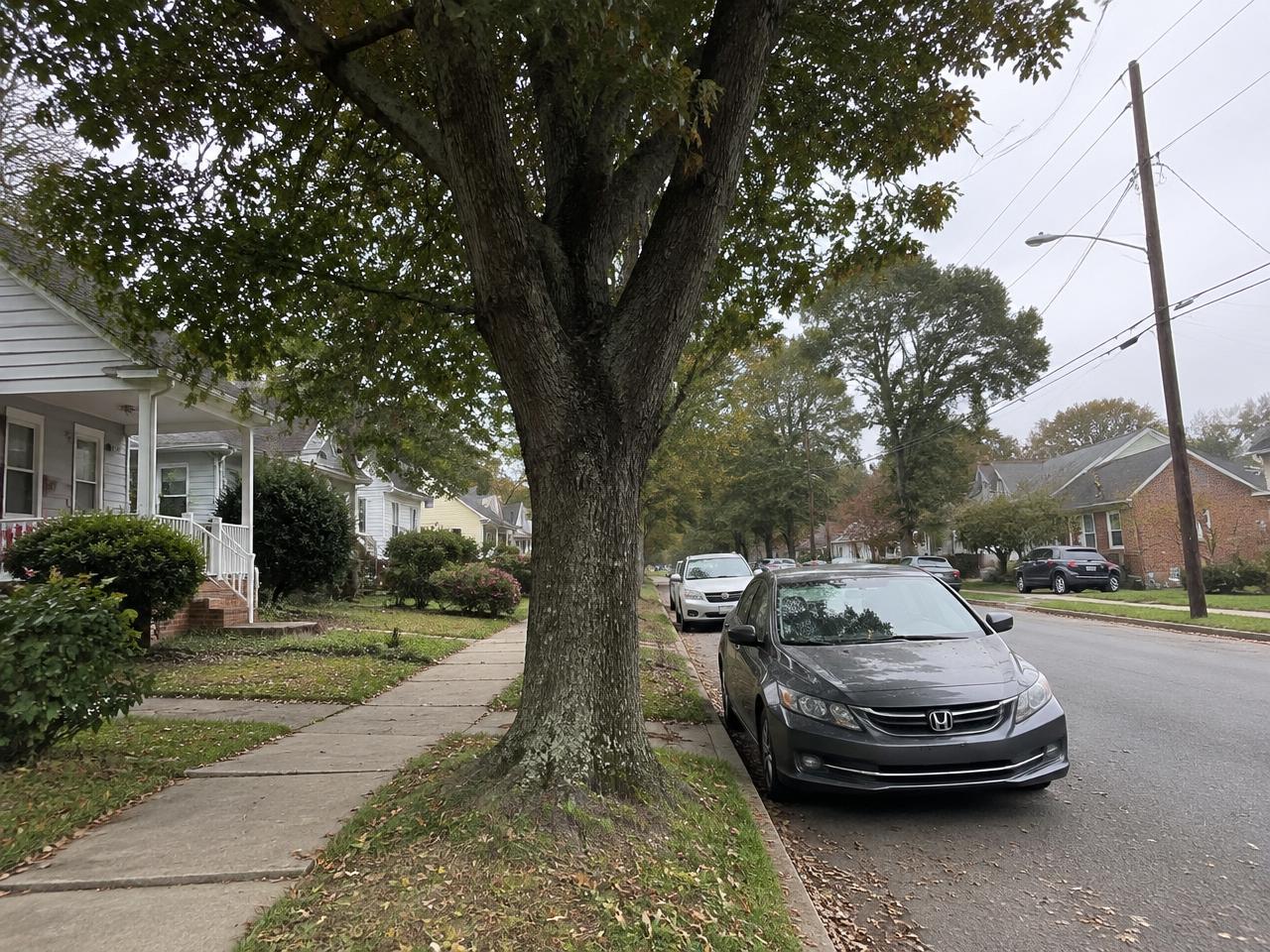
The strip between the sidewalk and the curb usually belongs to the town, even though you mow it. Removing a tree there requires the town's involvement — in Raleigh that means Urban Forestry, and Apex, Cary, Holly Springs, Morrisville, Garner, and Fuquay-Varina each handle it through their planning or public works departments.
If you are unsure where your property actually ends, your recorded plat or survey will show it.
2. Tree conservation, tree-save, and buffer areas
Most subdivisions built in the last few decades were approved with tree-protection or conservation areas recorded on the plat — commonly the wooded strip at the back of the lot or along a creek. Those trees are protected even though they are inside your property line.
Riparian buffers along streams and drainages carry state and county protection as well. That back corner by the creek is exactly the area people clear without realizing it is regulated.
3. HOA rules
This is the one that actually catches homeowners. Many Apex, Cary, Holly Springs, and Morrisville communities require written architectural approval before any tree comes out, and some prohibit removing trees above a certain diameter outright. Your HOA is not a government body, but it can fine you.
In townhome and condo communities the association may own the tree entirely, in which case removal is their decision and their cost.
4. Land clearing and larger disturbance
Clearing a lot is different from removing a tree. Once you disturb enough ground, sediment and erosion control rules apply, and clearing near a stream buffer or on a slope can require county or town review before work starts. If your project is measured in acres rather than trees, make the call first.
Hazardous and storm-damaged trees
Genuinely dangerous and storm-damaged trees are generally treated differently — the point of these rules is not to make you live under a failing tree. Even so, document the condition with photos before removal, especially in a protected area, so you can show why it had to go.
How to check in five minutes
- Look at your plat or survey for tree-save, conservation, buffer, or easement areas.
- Decide whether the tree is inside your line or in the right-of-way at the street.
- Search your HOA covenants for the word 'tree' before you do anything else.
- Call your town's planning department with the address and describe where the tree stands.
- Photograph the tree and its base before removal, whatever the answer is.
We will flag a tree that looks regulated when we quote it, but the permission is yours to confirm. Call us once you know and we will get you scheduled.