
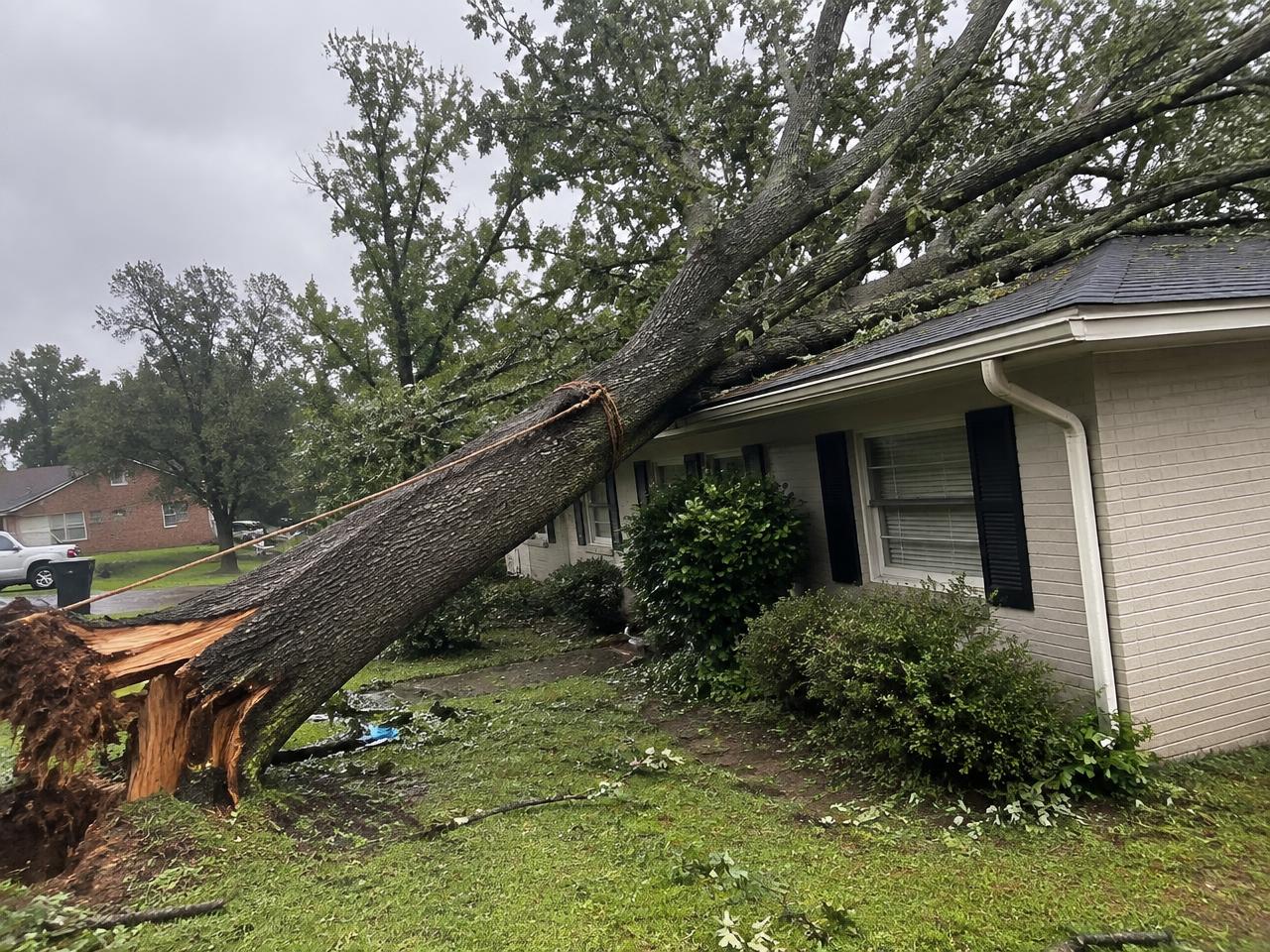
We take these apart in small pieces on ropes, lowering each one to a controlled spot, and we set the plan on site before the first cut. That is slower than a straight drop, and it is the reason nothing ends up on the roof.
What's included
- An on-site read of the defect: lean, root plate lift, trunk crack, cavity, or fungal bracket at the base.
- A rigging plan that keeps weight off the failing part of the trunk.
- Sectional dismantling from a climbing line or bucket, with every piece lowered rather than dropped.
- Protection for whatever is under the tree — roof, fence, HVAC unit, shed, or shrub bed.
- Full haul-off of the wood and brush, and a clean rake of the work area.
- A plain-English note on any other trees on the property we think are heading the same way.
What it costs
Hazard work costs more than a routine removal because it takes longer and needs more rigging, not because of the urgency.
$800 – $3,500 depending on the defect and what sits beneath the tree
What moves the number:
- Type of failure — a lean over open lawn is cheaper than a split trunk over a bedroom.
- Whether the tree is dead and brittle, which rules out climbing it and may require a bucket or crane.
- How much of the load has to be lowered by rope rather than dropped.
- Access for a bucket truck, and whether a crane day is needed.
- Emergency response outside normal hours.
The trees that fail first around the Triangle
Two patterns show up over and over here. Loblolly pines that lost their neighbors to a new development are suddenly wind-exposed and snap 20 feet up. And mature red oaks in older Apex and Cary neighborhoods develop root rot after years of grade changes and irrigation, then lift a whole root plate in saturated ground. Both look healthy from the street until they are not.
Questions about hazardous & storm-damaged tree removal
How do I know if a leaning tree is actually dangerous?
A tree that has leaned the same way for twenty years is usually fine. What matters is new movement: cracked or heaving soil on the high side, a fresh gap at the base, or a lean that changed after a storm. Send a photo of the base and we will tell you.
Is a dead tree more expensive to remove?
Usually yes. Dead wood is unpredictable, so a climber often cannot safely work in it and we bring a bucket or crane instead. It also has to come down in smaller pieces. Removing a dead tree early is nearly always cheaper than removing it after it falls.
Will my insurance cover this?
Homeowner policies generally cover removal after a tree has damaged a structure, not preventive removal of a risky tree. If a tree is already on your house, we can provide photos and an itemized invoice for the claim.
Can you remove a tree hung up in another tree?
Yes, and please do not pull on it. A hung-up tree is under load in ways you cannot see from the ground. We take the weight off with rigging from above, then bring it down in sections.