
What tree removal actually costs in Apex and Cary, NC (2026)
By Alejandro Castro, Castro Tree Services · · 6 min read
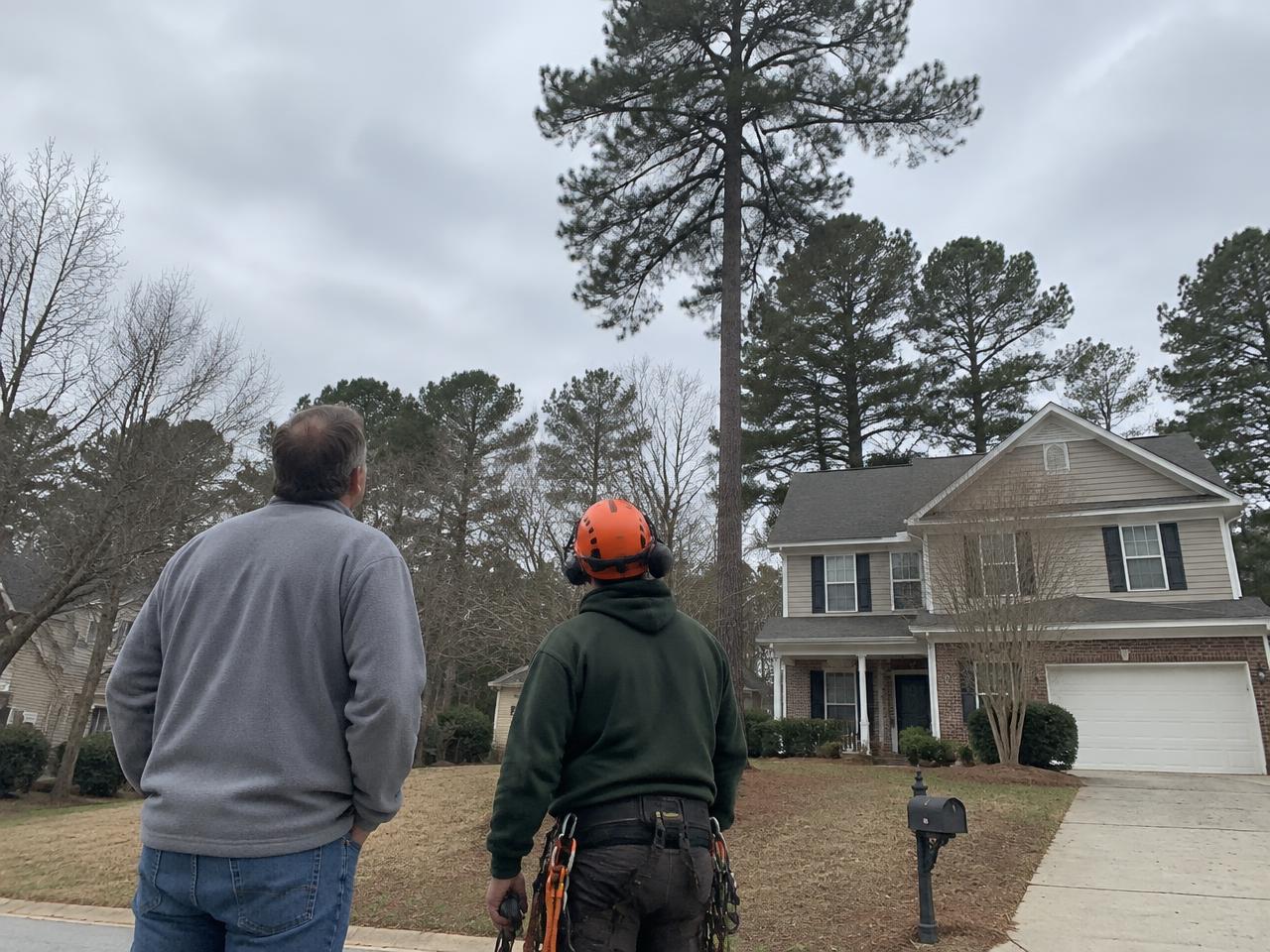
Almost every call starts the same way: how much to take that tree down? The honest answer is that the tree is only half the question. What sits under it, and whether a truck can reach it, moves the price more than height does.
Here are the ranges we actually quote around Apex, Cary, and the rest of western Wake County, and what pushes a job to one end or the other.
Typical price ranges in western Wake County
For a standard residential removal — one tree, reasonable access, wood and brush hauled off, yard raked clean — this is the range most jobs land in:
- Small tree under 25 ft: roughly $250 to $500.
- Medium tree 25 to 50 ft: roughly $500 to $1,000.
- Large tree 50 to 75 ft, the common Triangle loblolly: roughly $900 to $1,800.
- Very large tree over 75 ft, or a big spreading oak: roughly $1,600 to $2,400 and up.
- Stump grinding, if you want it: roughly $95 to $450 per stump.
The five things that actually move the price
- What is underneath. A tree that can be felled whole into open lawn is an hour of work. The same tree over a roof has to come down in 40 pieces on ropes, and that is most of a day.
- Access. If a chipper and truck reach the tree, the wood goes straight in. If everything is carried through a 36-inch gate, add labor.
- Condition. Dead, split, or hollow wood cannot be safely climbed, so we bring a bucket or a crane. That equipment is the single biggest line-item jump on a residential job.
- Species and form. Pines are one straight stem and come down predictably. A mature water oak has enormous limb spread and far more volume than it looks like from the ground.
- What you want left behind. Chips hauled versus spread, trunk hauled versus cut to firewood length, stump ground versus flush-cut — each one changes the number.
Why the crane day is sometimes the cheap option
Homeowners flinch at crane pricing, but a crane can lift a whole top out over a house in one pick that would otherwise take four hours of sectional rigging. On the right job it saves money and dramatically reduces the risk to the roof. On the wrong job it is a waste. Any honest company will tell you which yours is.
How to compare quotes without getting burned
If one quote is wildly lower than the others, look for what is missing rather than assuming you found a deal.
- Is haul-off included, or does the wood stay in your yard? This is the most common hidden gap.
- Is cleanup included, and does it mean raked and blown, or just the big pieces picked up?
- Is the stump flush-cut, ground, or left knee-high?
- Do they carry liability insurance and workers' compensation, and will they send the certificate? An uninsured crew on your roof is your problem.
- Is the price in writing before the day of work? Verbal numbers are what get revised at noon.
When photos are enough and when we need to visit
Most residential jobs can be quoted accurately from three photos: the whole tree, the base, and a shot showing what surrounds it — house, fence, power line, gate. That saves a scheduling round trip for everyone.
We do come look when access is genuinely unclear, when the tree is unusually large, or when there is damage we need to read in person before committing to a plan.
Is it cheaper to wait?
Almost never. A live tree can be climbed and taken apart efficiently. Once it is dead and brittle, that option is gone and the job needs equipment. And once it is on the house, you are paying emergency rates plus a roofer. Removing a declining tree on a normal Tuesday is the cheapest version of the same work.
Send photos and you will have a firm written number, usually the same day. Nothing changes on you halfway through the job.